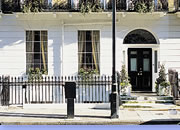




Harley Street  
 
London Hypnotherapy UK
Someone who cares
 
info@londonhypnotherapyuk.com 0207 467 8564

November 30, 2009

London Psychotherapy

London Psychotherapy is based at 10 Harley Street, London, W1G 9PF. The organization was set up by Dr Thomas Kraft in 1971. For a period of time Dr Tom Kraft and his son, Dr David Kraft worked together; in 2008, Dr David Kraft continued the practice on his own.

London Psychotherapy is the specialist partner of London Hypnotherapy UK. Dr David Kraft is a psychotherapist and hypnotherapist. Some people come solely for individual psychotherapy session; however, with others, Dr Kraft feels that it is important to use hypnosis as an ajunct to his therapeutic procedure.

Where is London Psychotherapy and how do I get there?

London Psychotherapy is based at 10 Harley Street in London, the nearest underground sattion being Oxford Circus. Ocford Circus is on the Victoria and Bakerloo Line and is easily accessible.


How do I book a psychotherapy session?

One used to have to go to one’s general practitioner; however, now, one can simply ring up for an appointment.

If you would like a session, call 0207 467 8564 today…..

November 27, 2009

Looking for a Psychotherapist in Central London?

Dr David Kraft is a specialist psychotherapist in central London who offers counselling and psychotherapy for people suffering from anxiety, stress, and problems in relationships. He is based at 10 Harley Street, London, W1G 9PF, UK. Dr Kraft is the founding member of London Hypnotherapy UK and the manager of London Psychotherapy.   


URL:

www.londonpsychotherapy.co.uk

Article:

Looking for a specialist psychotherapist in London but don’t know where to look? Help is at hand.

The first question to consider is what sort of therapist you are looking for. There are many types of therapist, and it is worth looking at the main ones briefly. One may divide the approaches to clinical psychology into five categories as follows:


1 Somatic Therapies (pharmacotherapy, ECT, psychosurgery)

2 Psychodynamic Therapies (psychoanalysis, psychodynamic psychotherapy)

3 Behavioural Therapies (pure behaviourism, radical behaviourism, social learning, soft behaviourism, behaviour modification)

4 Cognitive Therapies (cognitive and cognitive-behaviour therapy, automatic thought treatment, RET)

5 Humanistic (phenomenological)


Psychotherapy falls within the second category. Traditionally, psychotherapy is a lengthy procedure: during the therapy, the client recounts day-to-day thoughts, problems and feelings, as well as important episodes in the past—particularly from childhood. The client is encouraged to move from one thought to the next—a technique known as ‘free association’—and to ‘work through’ difficult situations from the past or in the present. During this process, the client gains considerable insight into his or her psychopathology, and may begin to remove or shift unwanted repression, helping the ego to manage difficult scenarios in a more positive or appropriate manner. The therapist’s rôle is to encourage the client to address and analyze these feelings; it is important not to interrupt the client especially when there is an awkward silence—it is often here, especially when the client exhibits an uncomfortable movement or expression, that an important point is about to be made.        


Dr David Kraft is a skilled psychotherapist who also uses psychodynamic psychotherapy. Psychodynamic psychotherapy treatment can vary in length. Dr Kraft points out that most clients who come for help, want to feel that they are improving straight away—they don’t want to be in therapy for a long period of time. Dr Kraft, therefore uses strategic psychotherapy in order to get at the heart of the problem as quickly as possible; in some instance, he uses hypnotherapy to accelerate and enhance this process. However, some clients feel that they need support over a long period of time—i.e., for several years. 


Can I improve and feel better quickly?

Yes. Dr Kraft has had a lot of experience working with people who have needed urgent attention; and, sometimes, people feel better after one or two sessions—the support that they are given helps them to continue their lives in an appropriate and healthy manner. Dr Kraft believes that constant, reliable support is the key to psychotherapy.


How do I choose the right psychotherapist in central London?

Psychotherapists must have been through psychotherapy themselves. This is important because, if they are to help clients in the consulting room, they must have had the experience themselves in order to empathize them. When you book a session with a psychotherapist, it is important that you book a few sessions to see whether you feel comfortable in that setting. Trust is extremely important: you must feel that you trust your psychotherapist before you embark on your journey—however long or short that experience might be. The best psychotherapists are the ones that let you decide how frequently you attend sessions. You must be in control of your psychotherapy if you want to be in control of your life! 


How do I book an appointment at London Psychotherapy?

It used to be the case that one had to go to one’s GP in order to get a referral letter; however, nowadays, one can simply go to the appropriate website or ring and book a session. For a consultation appointment at London Psychotherapy, ring 0207 467 8564. Or, you can follow the link by clicking on London Psychotherapy (the blue icon) above. 

Key Phrases for Future Searches: London Psychotherapist, London Psychotherapy, Psychotherapist in London, Psychotherapy in London, Hypnotherapist in London, Hypnotherapy, Hypnosis, Couselling  

How do I get there? 

November 25, 2009

London Hypnotherapy UK

Welcome to London Hypnotherapy UK. There are many therapists who use hypnotherapy in London, but, here at London Hypnotherapy UK, the therapist, Dr Kraft combines psychotherapy with hypnotherapy. Dr David Kraft, is the founding member of London Hypnotherapy UK.

This approach can be used to treat a large number of psychological conditions. 

London Hypnotherapy UK offices are at 10 Harley Street, W1G 9PF, UK. For a hypnotherapy session, please phone 0207 467 8564. If you have any questions please follow the link or ring 10 Harley Street for help.

London Hypnotherapy UK is the specialist partner organization of London Psychotherapy. 2009.

London Hypnotherapy

Welcome to London Hypnotherapy. There are many organizations that offer hypnotherapy in London, but, here, the therapist offers a combined approach of psychotherapy with hypnotherapy. Dr David Kraft, the founding member of London Hypnotherapy UK, combines psychotherapy with hypnotherapy, a technique known as psychotherapy integration.

This approach is very powerful indeed, and it can be used to treat a large number of psychological conditions.

London Hypnotherapy UK is based at 10 Harley Street, London, W1G 9PF. For an appointment with an experienced and highly skilled hypnotherapist and psychotherapist, please phone 0207 467 8564. If you have any questions please follow the aforementioned link or ring Harley Street for specialist help.

London Hypnotherapy UK is the specialist partner organization of London Psychotherapy. 2009.

November 24, 2009

Eating Disorders: Anorexia and Bulimia

London Hypnotherapy UK is committed to treating individuals who have eating disorders.

According to DSM IV, eating disturbances are divided into two categories: Anorexia Nervosa (AN) and Bulimia Nervosa (BN).

Anorexics refuse to eat and are unable to maintain a minimal body weight: often clients with this disorder have a distorted body image. Female patients with anorexia often also suffer from amenorrhoea; they present with a childlike appearance and often have suncken eyes and a drawn-in face. Anorexia Nervosa is subdivided into two main groups:

Restricting Type: weight loss due to constant dieting and/or excessive exercise    

Binge Eating/Purging Type: weight loss due to a bingeing and purging cycle (self-induced vomiting); inappropriate use of laxatives.

Bulimics suffer from binge eating and purging. Again, individuals suffer from an obsessive preoccupation with body weight and body size.  Bulimia is also divided into two groups:

Purging SubType: bingeing followed by self-induced vomiting, misuse of laxatives, diuretics and/or enemas

Non-Purging SubType: binge eating and fasting and/or excessive exercise

Anorexia Nervosa

The main feature in the aetiology of anorexia is that the client is caught up in a complex and highly disturbed family infrastructure; (s)he displays both obsessional and highly perfectionist features and this is a product of the family’s psychopathology. Anorexics have internal hostilities and this manifests itself in the restriction of food; essentially, in many cases, anorexics are punishing both themselves and their parents for hostilities of the past. Often, anorexics are perfectionists. This striving for perfectionism pervades the whole of their lives including the home and work environments; individuals often have an encyclopaedic knowledge of calorie values and the precise constitution of food stuffs. In order to prevent any weight gain, individuals will go to any length to hide food or lie about the quantity of food they have consumed. Some individuals also exercise religiously.

Patients with anorexia can suffer from a number of physical complications.

Some patients suffer from some of many of the following:

bradycardia, hypophosphataemia and delirium, amenorrhoea, permanent osteoporosis, stunted growth, hypothermia, zinc deficiency, dry skin, chapped lips, skin pallor and sunken eyes

Hypnotherapy is an extremely powerful tool in the treatment of anorexia

Bulimia Nervosa

The essential component of bulimia nervosa involves binge eating accompanied by some form of purging behaviour-intentional vomiting, use of laxatives, diuretics and enemas.

Patients suffering for bulimia nervosa frequently experience medical complications to a greater or lesser degree depending on the severity of the condition. Individuals suffering from bulimia can experience some or many of the following:

electrolyte disturbance (esp. hypokalaemia), cardiac arrhythmias, dental carries, lacerations in the mouth, gastric reflux and oesophagitis, swelling of the salivary glands, schlera haemorrhaging, chronic dehydration, calcium deficiency causing loss of bone density

Many researchers have established a high correlation between bulimia nervosa and hypnotisability. Hypnotherapy is an extremely valuable tool in the treatment of eating disorders, a treatment approach which does not require any form of medication. The combination of a behavioural and a psychodynamic approach now comes under the heading of integrative psychotherapy which is a fast evolving treatment approach (Kraft & Kraft, 2007). Hypnotherapy offers a rapid and cost effective form of treatment for eating disorders, and it is recommended that these procedures are used on their own or in combination.


November 23, 2009

Do you suffer from irritable bowel syndrome (IBS)? Help is at hand…

London Hypnotherapy UK and London Psychotherapy is committed to helping people who suffer from Irritable Bowel Syndrome (IBS). Dr David Kraft has worked with individuals who suffer from this condition and has treated them successfully.

Irritable bowel syndrome (IBS) is a common GI disorder. Up to 20% of the population in London suffer from this condition. Clients who come for hypnotherapy often complain that they have a number of symptoms–diarrhoea, constipation, feelings of being bloated, stomach pain and frequency. IBS can be classified as follows:

                        IBS-C=Constipation-predominant

                        IBS-D=Diarrhoea-predominant

                        IBS-A=Alternating constipation and diarrhoea

                        IBS-O=Other abdominal symptoms

Dr Kraft uses gut-directed hypnotherapy–that is to say the Manchester approach (Whorwell, Prior and Faragher, 1984). After induction and deepening, Dr Kraft uses guided imagery and the river metaphor to help the client to take control of his or her feelings; the process is combined with the direct application of hand warmth on the stomach. Dr Kraft also uses the tree metaphor–this is a particularly powerful technique because the tree represents strength and solidity–and content free therapy. Again, this help clients to gain control. They are also taught self hypnosis.

Most patients have shown a remarkable improvement and this has had a knock on effect on their lives. Hypnotherapy reduces tension and anxiety; it also reduces depression, and thus has a good effect on IBS symptoms.


November 22, 2009

How can psychotherapy and hypnotherapy help me? What will the psychotherapist do for me? Read more…

Dr David Kraft takes a tremendous amount of care in the initial consultation session to build rapport with his patients and to listen very carefully. Generally, he will not diagnose or even label symptoms; but, rather, he will be guided by each individual before treatment begins. 

Hypnotherapy is useful in the treatment of a wide range of problems. Here is a list of some of them:

  • Anxiety (see article)
  • Alcoholism (see article)
  • Stress
  • Eating Disorders (Anorexia Nervosa & Bulimia Nervosa)
  • Sexual Dysfunction (see article)
  • Lack of Confidence
  • Depression
  • Anger
  • Phobias* (including Social Phobia and Agoraphobia) (see article)
  • Irritable Bowel Syndrome (IBS) (see article)
  • Exam Stress
  • Excessive Sweating (Hyperhidrosis) (see article)
  • Sleep Disorders (including insomnia, nightmares and night terrors) (see article)
  • Obsessive Compulsive Disorder (OCD)
  • Grief (and Bereavement)
  • Migraines
  • Snoring (and Obstructive Sleep Apnoea Syndrome)
  • Performance Anxiety (Musical, Public Speaking, Sports)
  • Panic Attacks
  • Pain Relief
  • Post Traumatic Stress Disorder (PTSD)
  • Weight Loss
  • Speech Problems


In addition, hypnotherapy can be used to enhance performance and to help the client to realize his or her own potential in a range of areas. Hypnotherapy can help individuals to change their lives in profound ways, providing them initially with the support that they need, and then the ability to utilize the skills and maximize the potential that they always and already have. 

Dr David Kraft uses psychotherapy in conjunction with hypnosis: this combined approach is supportive and very powerful indeed.  


Phone Dr Kraft on 020 7467 8564 today.

London Hypnotherapy: 10 Harley Street, London, W1G 9PF

November 21, 2009

Merger between London Hypnotherapy UK and London Psychotherapy

The Merge between London Hypnotherapy UK & London Psychotherapy

On the 10 of October 2009, Dr David Kraft, with the help of his webmaster at Vital Web Designs, merged his company with London Psychotherapy. Both organizations are based at 10 Harley Street, London, W1G 9PF, UK. If you require further information or an appointment please phone 0207 467 8564.

Dr Kraft is a skilled psychotherapist and hypnotherapist working in central London. His apporach is integrative: it combines psychodynamically-orientated psychotherapy with hypnotherapy.

Powered by WordPress