






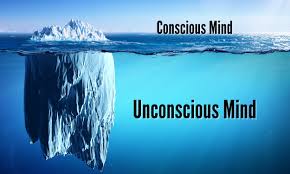
The concept of the unconscious lies at the heart of modern psychology and psychotherapy. It refers to mental processes that operate outside of conscious awareness yet powerfully influence thoughts, emotions, decisions, and behaviour. While we experience only a small portion of our mental life consciously, much of what drives us happens beneath the surface.
Freud and the Origins of the Unconscious
The most influential early theory of the unconscious was developed by Sigmund Freud. Freud proposed that the mind is divided into different levels, with the unconscious containing thoughts, impulses, memories, and desires that are unacceptable or distressing to the conscious mind. These contents are not simply forgotten; they are actively kept out of awareness because they generate anxiety or psychological conflict.
According to Freud, unconscious material continues to affect behaviour indirectly, showing itself through dreams, slips of the tongue, emotional reactions, and psychological symptoms.
Unconscious Mechanisms and Mental Processes
Unconscious mechanisms are automatic mental operations that occur without deliberate control. Some are adaptive and essential for everyday functioning, such as reflexes, habits, and automatic emotional responses. These allow the brain to respond quickly and efficiently without constant conscious effort.
Other unconscious mechanisms can contribute to psychological distress. For example, learned emotional reactions, implicit beliefs about the self, or conditioned fear responses may operate outside awareness while shaping behaviour and relationships.
APPOINTMENTS: 0207 467 8564 or 07946 579645
Repression and Psychological Defence
One of Freud’s key ideas was repression — the process by which threatening or painful thoughts and memories are pushed out of conscious awareness. Repression is considered a defence mechanism, intended to protect the individual from overwhelming anxiety.
However, repressed material does not disappear. Instead, it may re-emerge in disguised forms such as anxiety, depression, compulsive behaviours, or physical symptoms with no clear medical cause. Understanding these hidden influences is a major goal of depth-oriented psychotherapy.
Hypnosis and the Yapko Perspective
Hypnosis has long been associated with the unconscious. In a hypnotic state, attention becomes highly focused, and normal critical filtering may be reduced, allowing access to memories, emotions, and associations that are not easily reached in ordinary waking consciousness.
However, Michael Yapko, a leading expert in clinical hypnosis, emphasises that hypnosis does not make someone unconscious. People in hypnosis remain aware, responsive, and capable of critical thinking. Consciousness and unconsciousness exist on a continuum, rather than as distinct states. Hypnosis can therefore be understood as a collaborative process of focused attention that allows exploration of automatic processes, emotional learning, and implicit patterns, without loss of consciousness or control.
The Problem of False Memory
Memory is not a perfect recording of events. Both hypnosis and psychotherapy can unintentionally shape or distort recollections, especially under suggestion or expectation. False memories can feel emotionally vivid and convincing, even when factually inaccurate.
This does not invalidate unconscious processes, but it underscores the need for therapists to focus less on “recovering exact memories” and more on understanding emotional meaning, patterns, and present-day impact.
David Kraft and the Unconscious in Clinical Practice
Psychotherapist, David Kraft, contributed significantly to understanding unconscious processes in therapy. He emphasised that unconscious material is not a hidden storehouse of literal memories to uncover, but a dynamic system of emotional learning, symbolic meaning, and implicit knowledge shaping experience in the present.
Kraft’s approach highlights the importance of respecting the protective function of unconscious processes, and exploring them carefully through client-led work, imagery, and emotional reflection. This ensures therapy engages unconscious material safely and meaningfully, without relying on forced recollection or suggestion.
The Importance of the Unconscious in Psychotherapy
In my work, the unconscious is treated as an active and meaningful aspect of psychological life, not a passive or mysterious entity. I work with unconscious mechanisms as they appear in emotional responses, habitual patterns, bodily reactions, imagery, and language — rather than assuming insight must come from uncovering specific historical events.
By bringing unconscious processes into reflection, therapy allows individuals to gain choice, flexibility, and awareness. Symptoms that once felt automatic or mysterious can be understood as meaningful responses shaped by past and present experiences. Drawing on psychodynamic understanding, contemporary hypnosis, and evidence-based psychotherapy, my aim is to expand consciousness, enabling previously automatic or unexamined processes to become available for insight and integration.
Ultimately, attending to the unconscious allows psychotherapy to go beyond surface behaviour and address the deeper structures shaping emotional life. Understanding what lies beneath awareness is not about dwelling on the past for its own sake, but about enabling lasting psychological change in the present.
David Kraft PhD