





Dr David Kraft: Psychotherapy, Research and Professional Leadership in Contemporary Clinical Practice
Introduction
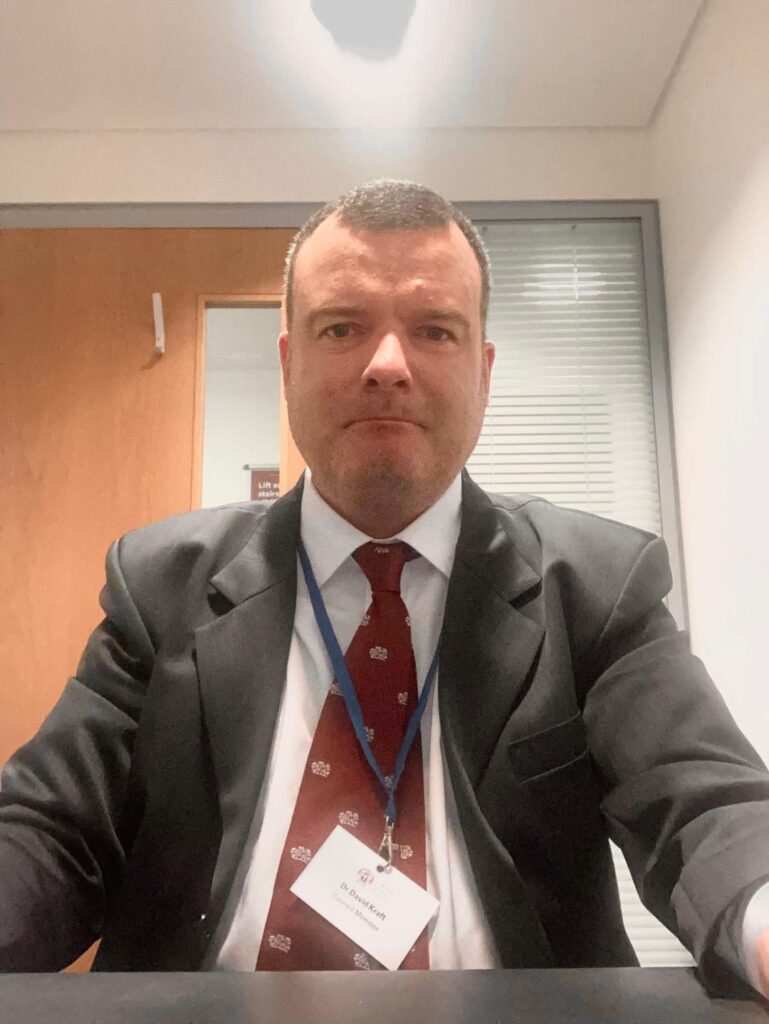
Dr David Kraft is a British psychotherapist, clinical hypnotherapist, researcher and teacher whose career spans psychotherapy, academic publication, professional governance and clinical training. Over several decades, he has developed an integrative approach to treatment that combines psychodynamic psychotherapy, behavioural methods and clinical hypnosis. His work reflects both rigorous academic engagement and a commitment to practical therapeutic effectiveness.
David Kraft’s professional journey has not been linear. It began in the arts, moved through doctoral-level scholarship, included a formative period in education, and then evolved into clinical and behavioural research in collaboration with his father, Dr Tom Kraft. That trajectory has shaped a distinctive clinical voice that values depth of understanding, theoretical plurality and empirical inquiry.
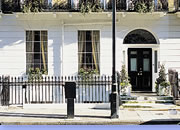
Today, David Kraft is associated with private practice in Harley Street, London, and has held significant positions within major professional bodies, including President of the Hypnosis and Psychosomatic Medicine Section at the Royal Society of Medicine, and various positions at the British Society of Clinical and Academic Hypnosis (BSCAH). His publications have addressed a wide range of psychological and psychosomatic conditions, and his teaching has influenced clinicians across disciplines. In fact, Dr Kraft has taught two decades of healthcare professionals across many areas in medicine, psychology and dentistry.
This article examines his development as a practitioner and scholar, his clinical philosophy, his research contributions and his leadership within the profession.
***** APPOINTMENTS: 0207 467 8564 / 07946 579645 *****
Early Academic Formation: From Music to Doctoral Study
Before entering the field of psychotherapy, David undertook undergraduate study in music, completing a Bachelor of Music degree. He began at the Guildhall School of Music and Drama and completed his first degree at Goldsmith’s College, University of London. Following his undergraduate work in music, David Kraft continued his academic development at doctoral level, focussing on the music of Olivier Messiaen. He gained his PhD in 2000.
Early Career in Education
Before entering full-time clinical practice, Dr Kraft spent several years working as a teacher. That period in education provided direct experience of communication, mentoring and the structured development of others. Teaching requires clarity of explanation, patience and the ability to respond to individual differences in learning style and emotional readiness.
Collaboration with Dr Tom Kraft and Behavioural Research
A pivotal stage in Dr Kraft’s development occurred when he began working with his father, Dr Tom Kraft, on behavioural research. This collaboration marked a transition from education into clinical and research-based practice.
Dr Tom Kraft was known for his contributions to clinical hypnosis and behavioural approaches to treatment. Working alongside an established clinician and researcher provided Dr David Kraft with direct exposure to case formulation, therapeutic innovation and scholarly publication. It also introduced him to the disciplined process of clinical research, in which hypotheses are examined through systematic observation and reflective analysis.
Behavioural research, particularly in the context of phobias, anxiety disorders and psychosomatic conditions, emphasises measurable change and structured intervention. Through this collaboration, David engaged with techniques such as systematic desensitisation, graded exposure, pairing, positive reinforcement and cognitive-behavioural formulation. These approaches focus on observable behaviour and physiological response, while also attending to underlying cognitive and emotional patterns.
The intergenerational dimension of this collaboration is noteworthy. It represents not merely apprenticeship but dialogue between theoretical perspectives. Dr Kraft’s later integrative style suggests that he did not confine himself to a single school of thought. Instead, he incorporated behavioural precision within a broader psychodynamic and relational framework.
Clinical Training and Psychotherapeutic Orientation
David undertook formal training in psychotherapy and clinical hypnosis, achieving accreditation with professional bodies in the United Kingdom—namely, the UKCP and BSCAH. His training incorporated psychodynamic psychotherapy, behavioural therapy and hypnotherapy, allowing him to work across theoretical traditions.
Psychodynamic psychotherapy emphasises unconscious processes, early relational patterns and the internalisation of formative experiences. It explores how past relationships shape present emotional responses and behavioural tendencies. Within this framework, therapy becomes a space in which recurring relational dynamics can be understood and modified.
Behavioural and cognitive-behavioural approaches focus on learned responses, reinforcement patterns and maladaptive beliefs. These methods often involve structured exercises and clearly defined therapeutic goals. In cases of phobia or panic disorder, for example, gradual exposure to feared stimuli may reduce avoidance and recondition anxiety responses.
Clinical hypnosis adds another dimension. Hypnosis can facilitate focused attention and heightened suggestibility, creating opportunities for therapeutic reframing and the modulation of physiological symptoms. When used ethically and skilfully, it can support relaxation, pain management and the treatment of psychosomatic disorders.
Dr Kraft’s clinical orientation is integrative rather than doctrinaire. He combines depth exploration with practical intervention, adapting methods to the needs of each individual rather than imposing a single theoretical model.
Private Practice in London
In 2007, Dr Kraft established a private clinical practice in Harley Street, London, working with individuals experiencing anxiety disorders, phobias, depression, trauma-related difficulties and psychosomatic conditions. His practice has included work in central London as well as in North London, expanding access beyond a single geographical setting.
London has long been a centre for psychotherapeutic innovation and multidisciplinary medical practice. Operating within this environment requires high professional standards, ethical accountability and continuous professional development. Dr Kraft’s sustained presence in this context reflects both clinical demand and professional credibility.
Clients who seek psychotherapy in private practice often present with complex and long-standing difficulties. The integrative model that Dr Kraft employs allows him to address surface symptoms while also examining deeper psychological structures. For instance, a presenting problem of social anxiety may involve behavioural avoidance, negative self-beliefs and early experiences of criticism or exclusion. An integrative approach permits intervention at each of these levels.
His work with psychosomatic conditions has been particularly notable. Disorders such as irritable bowel syndrome, hyperhidrosis and certain chronic pain presentations illustrate the intimate connection between psychological stress and bodily response. By integrating hypnosis with psychodynamic understanding and behavioural techniques, David addresses both physiological and emotional dimensions of distress.
Research and Academic Publications
Alongside clinical work, Dr Kraft has published over 30 articles in peer-reviewed journals on topics including panic disorder, social phobia, driving phobia, sleep disturbance, eating disorders and psychosomatic illness, to name but a few. His research often draws upon detailed case studies, combining clinical observation with theoretical reflection.
Case study methodology provides rich qualitative data. It allows for nuanced analysis of therapeutic process and outcome. Dr Kraft’s publications contribute to an evidence-informed understanding of how integrative psychotherapy and hypnosis can produce meaningful change. His work on panic disorder without agoraphobia, for example, has explored the interplay between cognitive misinterpretation of bodily sensations and conditioned fear responses. In studies addressing specific phobias, he has examined the efficacy of systematic desensitisation combined with psychodynamic exploration. These contributions situate him within an ongoing conversation about the relationship between behavioural technique and depth psychology. He has also published papers exploring the history of hypnosis and psychological medicine.
Research also reinforces clinical accountability. By publishing outcomes and theoretical reflections, Dr Kraft subjects his practice to peer scrutiny. This willingness to engage publicly with professional debate reflects intellectual seriousness and ethical responsibility.
Teaching and Professional Training
Dr Kraft has been actively involved in the training of healthcare professionals in clinical hypnosis and psychotherapy, and he has done this for many years. Teaching roles have included delivering foundational and advanced courses to doctors, dentists, psychologists and other practitioners seeking to incorporate hypnotic techniques into clinical settings. Professional training requires more than technical instruction. It demands the modelling of ethical awareness, reflective capacity and respect for patient autonomy. In this domain Dr Kraft has drawn upon his early career in education, combining pedagogical clarity with clinical expertise.
His teaching emphasises safe practice, careful assessment and the avoidance of exaggerated claims. In the field of hypnosis in particular, public misunderstanding can lead to unrealistic expectations. By grounding his instruction in evidence and clinical prudence, he contributes to the responsible dissemination of therapeutic skills.
Leadership within Professional Bodies
Dr Kraft has held significant roles within the British Society of Clinical and Academic Hypnosis, including positions related to academic oversight and accreditation. Such responsibilities involve maintaining standards of training, evaluating course content and ensuring that practitioners meet defined competencies.
He has also been involved with the Royal Society of Medicine, where he served in a leadership capacity within the Section of Hypnosis and Psychosomatic Medicine. He was Presdient of the Section between 2021 and 2023. The Royal Society of Medicine provides a forum for interdisciplinary dialogue and continuing medical education. Leadership within this institution indicates recognition by peers across medical and psychological disciplines.
Professional governance is often unseen by the public, yet it shapes the integrity of clinical fields. By contributing to accreditation processes and academic committees, Dr Kraft participates in the maintenance of professional standards that protect patients and support practitioner development.
Clinical Philosophy
At the heart of David’s work lies a belief in the transformative potential of the therapeutic relationship. Technique alone is insufficient. Change occurs within a relational context characterised by empathy, containment and collaborative exploration.
His integrative approach does not reduce individuals to diagnostic categories. While diagnosis can guide treatment planning, it does not capture the fullness of subjective experience. Dr Kraft’s practice reflects attentiveness to narrative, meaning and personal history alongside symptom relief.
He recognises that behavioural modification without emotional insight may produce temporary improvement, while insight without behavioural change may leave individuals immobilised. Integration of both domains allows for deeper and more sustainable transformation.
Continuing Influence and Contemporary Relevance
In an era where mental health services face increasing demand and diverse theoretical approaches compete for prominence, practitioners who bridge traditions play an important role. David Kraft’s career illustrates how psychodynamic, behavioural and hypnotic methods can coexist within a coherent clinical framework.
His combination of artistic beginnings, doctoral scholarship, educational experience, behavioural research and professional leadership presents a model of intellectual breadth and practical commitment. The movement from music to psychotherapy, from classroom to clinic, and from collaborative research to institutional leadership reflects a career defined by adaptability and sustained inquiry.
Conclusion
Dr David Kraft’s professional life encompasses psychotherapy, behavioural research, academic publication and organisational leadership. Beginning with a foundation in music and progressing through doctoral study, teaching and collaboration with Dr Tom Kraft, he has developed an integrative clinical approach that addresses both psychological and psychosomatic conditions.
His work in private practice in London, his contributions to scholarly literature, his training of healthcare professionals and his leadership within respected medical and psychological bodies collectively define a career of substance and influence. At its core lies a commitment to thoughtful, evidence-informed and relationally grounded psychotherapy.
Publications
(1) Kraft D (2013). Birdsong in the Music of Olivier Messiaen. London: Arosa Press. ISBN 978-1477517796.
(2) Kraft D (2017). Scowl and Modern Day Poetry. London: Arosa Press. ISBN 978-1491242766.
(1) Kraft T & Kraft D (2004). Creating a virtual reality in hypnosis: a case of driving phobia. Contemporary Hypnosis, 21 (2): 79-85.
(2) Kraft T & Kraft D (2005). Covert sensitization revisited: six case studies. Contemporary Hypnosis, 22 (4): 202-209.
(3) Kraft T & Kraft D (2006). The place of hypnosis in psychiatry: its applications in treating anxiety disorders and sleep disturbances. Australian Journal of Clinical and Experimental Hypnosis, 34 (2): 187-203.
(4) Kraft T & Kraft D (2007). An integrative approach to the treatment of hyperhidrosis: review and case study. Contemporary Hypnosis, 24 (1): 38-45.
(5) Kraft T & Kraft D (2007). The place of hypnosis in psychiatry, part 2: its application to the treatment of sexual disorders. Australian Journal of Clinical and Experimental Hypnosis, 35 (1): 1-18.
(6) Kraft T & Kraft D (2007). Irritable Bowel Syndrome: symptomatic treatment approaches versus integrative psychotherapy. Contemporary Hypnosis, 24 (4): 161-177.
(7) Kraft D (2009). Tribute to Dr Thomas Kraft for BSCAH’ British Society of Clinical and Academic Hypnosis Newsletter,3 (1): 11-12.
(8) Kraft D (2009) Obituary: Thomas Kraft’ British Medical Journal, 338: b265.
(9) Kraft T & Kraft D (2009). The place of hypnosis in psychiatry, part 3: the application to the treatment of eating disorders. Australian Journal of Clinical and Experimental Hypnosis, 37 (1): 1–20.
(10) Kraft D & Kraft T (2010). Use of in vivo and in vitro desensitization in the treatment of mouse phobia: review and case study. Contemporary Hypnosis, 27 (3): 184-194.
(11) Kraft D (2010). A tribute to Tom Kraft (1932-2008): psychiatrist, integrative psychotherapist, and teacher. Contemporary Hypnosis, 27 (3): 221-224.
(12) Kraft D (2011). The place of hypnosis in psychiatry, part 4: its application to the treatment of agoraphobia and social phobia. Australian Journal of Clinical and Experimental Hypnosis, Vols 38 (2) & 39 (1): 91-110.
(13) Kraft D (2011). Sharing experience: the waiting room. British Society of Clinical and Academic Hypnosis Newsletter, 5 (2): 22-24.
(14) Kraft D & Hawkins PJ (2011). Eating disorders. In Les Brann, Jacky Owens, Ann Williamson (eds.) The Handbook of Contemporary Clinical Hypnosis: Theory & Practice (pp425-440). Wiley-Blackwell: Chichester.
(15) Kraft D (2011). Counteracting resistance in agoraphobia using hypnosis. Contemporary Hypnosis & Integrative Therapy, 28 (3):235-248.
(16) Kraft D (2012). Panic disorder without agoraphobia. A multi-modal approach: solution-focused therapy, hypnosis and psychodynamic psychotherapy. Journal of Integrative Research, Counselling and Psychotherapy, 1 (1): 4-15.
(17) Kraft D (2012). Successful treatment of heavy smoker in one hour using split screen imagery, aversion, and suggestions to eliminate cravings. Contemporary Hypnosis & Integrative Therapy, 29 (2): 175-188.
(18) Kraft D (2012). Comment on Zimmerman’s use of the river metaphor in irritable bowel syndrome treatment. American Journal of Clinical Hypnosis, 55 (2): 160-167.
(19) Kraft D (2013). The place of hypnosis in psychiatry part 5: treatment of specific phobias—animal and situational subtypes. Australian Journal of Clinical and Experimental Hypnosis, 40 (2): 88-113.
(20) Kraft D (2013). Open access publishing. British Society of Clinical & Academic Hypnosis Newsletter, 7 (3): 12-13.
(21) Kraft D (2014). BSCAH Twitter. British Society of Clinical & Academic Hypnosis Newsletter, 8 (2): 17.
(22) Kraft D (2015). Successful treatment of snoring using hypnosis. Contemporary Hypnosis & Integrative Therapy 30 (4): 179-188.
(23) Kraft D (2015). Psychodynamic psychotherapy and hypnosis in the treatment of irritable bowel syndrome: a case report. International Journal of Psychotherapy, 19 (3): 5-12.
(24) Kraft D (2016). The place of hypnosis in psychiatry part 6: treatment of specific phobias—natural environment type, blood-injection-injury type, and other types. Australian Journal of Clinical and Experimental Hypnosis, 41 (1): 1-15.
(25) Kraft D (2016). The relevance of Gestalt Therapy to clinicians who use hypnosis today. Journal of Integrative Research, Counselling and Psychotherapy, 2 (1): 1-12.
(26) Kraft D (2016). The unique selling point of BSCAH from the perspective of a psychotherapist. British Society of Clinical & Academic Hypnosis Newsletter, 8 (8): 5.
(27) Kraft D (2016). The now deepener. British Society of Clinical & Academic Hypnosis Newsletter, 8 (9): 18-20.
(28) Kraft D (2017). Student Fairs. British Society of Clinical & Academic Hypnosis Newsletter, 8 (12): 19.
(29) Kraft D (2018). Dr Assen Alladin: a personal note. British Society of Clinical & Academic Hypnosis Newsletter, 9 (1): 3.
(30) Kraft D (2018). Treatment of severe dental phobia with systematic desensitization: case study. Contemporary Hypnosis & Integrative Therapy, 33 (1): 14-24.
(31) Kraft D & Naish PLN (2020). An interview with Peter Naish. Contemporary Hypnosis & Integrative Therapy, 34 (1): 54-66.
(32) Kraft D (2021). Origins of the Section of Hypnosis and Psychosomatic Medicine—Part 1. Contemporary Hypnosis & Integrative Therapy, 35 (1): 37-53.
(33) Kraft D (2022). Origins of the Section of Hypnosis and Psychosomatic Medicine—Part 2. Contemporary Hypnosis & Integrative Therapy, 36 (1): 23-32.
Unpublished Dissertations
(1) ‘The move to Boulez’ world: the early years’. BMus Dissertation, Goldsmiths’ College, University of London, 1996.
(2) ‘Birdsong in the music of Olivier Messiaen’. PhD Thesis, Middlesex University, 2000.
(3) ‘Anecdotes, stories, wonderment: an analysis of the use of illustrations in teaching. PGCE Dissertation, Cambridge University, 2003.
(4) ‘How is hypno-psychotherapy effective in the treatment of specific phobias?’ Psychotherapy Training Dissertation. National College of Hypnosis and Psychotherapy, 2012.
(5) ‘Representations of psychoanalysis in UK university psychology departments: a qualitative analysis’. MSc Psychology Dissertation, Kingston University, 2013.
Lectures Presented
(1) The place of hypnotherapy in psychiatry (part 1): the application of hypnotherapy in anxiety and sleep disorders. Conference presentation of the Section of Psychiatry and the Section of Hypnosis and Psychosomatic Medicine. The Royal Society of Medicine, 08/03/2005.
(2) The rôle of hypnosis in psychiatry (part 2): the application of hypnosis to psychosexual disorders. Conference presentation of the Section of Hypnosis and Psychosomatic Medicine. The Royal Society of Medicine, 03/04/2006.
(3) The treatment of IBS: integrative psychotherapy versus symptomatic approaches’. Conference presentation of the Section of Hypnosis and Psychosomatic Medicine. The Royal Society of Medicine, 01/10/2007.
(4) Throw out the cravings with the cigarettes: successful treatment of a heavy smoker in one hour using split screen imagery, aversion and suggestions to eliminate cravings. Conference presentation of the Section of Hypnosis and Psychosomatic Medicine. The Royal Society of Medicine, 06/06/2011.
(5) The place of hypnosis in psychiatry: an overview. ‘The Summit’. National College of Hypnosis and Psychotherapy Conference. The Grand Hotel, Leicester, 08/06/2013.
(6) An introduction to hypnosis for dentists. The London Day Surgery Centre, 27/09/2013.
(7) The use of hypnosis in the treatment and management of pain. Conference presentation at the Wessex and South West Pain Society, Holiday Inn, Winchester, 16/10/2015.
(8) An investigation of the relevance and use of dream interpretation in clinical practice. Conference presentation of the Section of Hypnosis and Psychosomatic Medicine. The Royal Society of Medicine, 07/03/2016.
Lecturing/Training Experience
(1) Involved in teaching doctors, dentists and psychologists with the British Society of Clinical and Academic Hypnosis (BSCAH): Introductory course (2013, 2015) and Foundation training (2014-present).
(2) Two-day hypnosis training for Frimley Park Hospital, Anaesthetics Department, 31/10/2016 & 01/11/16.
Radio Interviews
(1) Interview on BBC London on Phobic Disorders, 22/09/09.
Chaired Meeting and Symposia
(1) Academic Chair at Panel Session during the European of Society Conference, Manchester, 25th of August, 2017. Speakers: Kathryn Kinmond, Linda Harel, Hansjoerg Ebell. Chair: Dr David Kraft
(2) Royal Society of Medicine Webinar. Hypnosis Treatment of Gastrointestinal Disorders: Current Status and Future Projects, 11/10/2021. Dr David Kraft (Presidential Address), Dr Olafur Palsson, Dr Robert Logan (Chair).
(3) Royal Society of Medicine Webinar. ‘Practical Approaches to Sleep Disorders: Solution-Focussed Techniques and Analysis’, 7/12/2021.
(4) Royal Society of Medicine Webinar. Hypnosis and Cancer: Quo Vardis?, 13/12/2021. Dr David Kraft (Presidential Address), Dr Mayur Bodani, Professor Leslie Walker/Chairs: Dr Derek Tracy, Dr Sarah Partridge.
(5) Royal Society of Medicine Conference. Hypnosis: Stress Management and Self Care for All, 4/4/2022. Dr David Kraft (Presidential Address and Chair), Professor Katalin Varga, Professor Steve Peters, Professor Wendy Burn (Chair).
(6) Royal Society of Medicine Webinar. Mending Young Minds: a Multo-Modal Approach to CAMDH, 6/6/2022. Professor Karen Olness, Dr Tessa Reardon, Dr Rory Conn, Dr Laurence Sugarman, Dr David Kraft (Presidential Address), Dr Charlotte Davies (Chair).
(7) Meeting of the Section of Hypnosis and Psychosomatic Medicine, 12/9/2022. Dr Quinton Deeley, Dr Pete Lush, Dr Will McGeown, Dr Wendy Philips (Chair), Dr David Kraft (Presidential Address and Chair).
(8) Section of Hypnosis and Psychosomatic Medicine, Royal Society of Medicine Webinar. Spellbound: James Braid and John Elliotson, Victorian Pioneers of Hypnotism, 10/10.2022. Dr David Kraft (Chair and Presidential Address), Dr Mike Gow, Ms Wendy Moore.
(9) Lost in Translation: From Placebo in Theory to Placebo inPractice and The David Waxman Memorial Lecture, 12/12/2022. Section of Hypnosis and Psychosomatic Medicine Council Meeting. Dr David Kraft (Presidential Address and Chair), Dr Jo Marchant, Dr Ben Parris, Dr Doug Hardman. Other Chairs: Dr Maureen Tilford, Dr Sarah Partridge.
(10) BSCAH, BSMDH and RSM Conference: Effective Communication for Anaesthetists, 17/4/2023. Dr David Kraft (Presidential Address), Dr Wim Blancke, Dr Jane Boissiere, Dr Raj Jayawardena, Dr Kathleen Long, Dr Simon Tunstill, Mrs Jean Rogerson, Dr Mia van Manen, Dr Samantha Black, Dr Kate Berry, Mr Mike Stylianou, Dr Phillip Cunnington. Chairs: Dr Devin Terhune, Dr Anne Blyth, Dr Charlotte Davies, Dr David Kraft.
(11) Royal Society of Medicine Webinar– Interviewing the Masters Jeff Zeig, Julie Linden and Christina Liossi, 12/6/2023. Meeting of the Section of Hypnosis and Psychosomatic Medicine. Dr David Kraft (Presidential Address), Dr Gordana Milavic, Dr Jeff Zeig, Dr Julie Linden, Professor Christina Liossi, Dr Mark Jensen, Dr Laurence Sugarman, Dr Wendy Phillips.
(12) Royal Society of Medicine Day Meeting. Working with the Unconscious: Approaches to Treatment in Psychiatry, 11/9/2023. Meeting of the Section of Hypnosis & Psychosomatic Medicine in association with the Section of Psychiatry. Dr David Kraft (President), Dr Graham Kidd, Mr Stephen Smith, Dr Niels Detert, Mr Dave Smithson, Dr Alistair Dobbin, Dr Jo Talbot Bowen, Dr Leor Roseman, Professor Valerie Voon. Chairs: Professor Wendy Burn CBE, Dr David Kraft, Dr Mia van Manen.