






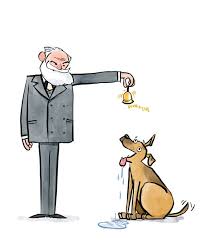
Unconditioned Stimulus (UCS): A Core Concept in Classical Conditioning
The Unconditioned Stimulus (UCS) is a foundational concept in behavioral psychology, particularly within classical conditioning, a learning theory first systematically studied by Ivan Pavlov in the late 19th and early 20th centuries. Understanding the UCS is essential for grasping how automatic emotional and physiological responses are formed—and how they can be modified in therapeutic settings.
Definition of an Unconditioned Stimulus
An Unconditioned Stimulus (UCS) is a stimulus that naturally and automatically triggers a response without prior learning. The key feature of a UCS is that it does not require conditioning to produce its effect. The response it evokes is innate, reflexive, and biologically based.
For example:
- Food naturally produces salivation.
- A loud noise naturally triggers a startle response.
- Physical pain produces withdrawal or distress.
- A pleasant sensation can produce relaxation or pleasure.
In each case, the stimulus automatically generates a reaction. That reaction is known as the Unconditioned Response (UCR).
APPOINTMENTS: 0207 467 8564 / 07946 579645
The Role of the UCS in Classical Conditioning
Classical conditioning involves learning through association. Pavlov famously demonstrated this process with dogs:
- Before conditioning
- UCS: Food
- UCR: Salivation
- During conditioning
- Neutral stimulus (e.g., bell) paired repeatedly with food (UCS)
- After conditioning
- Conditioned stimulus (bell alone)
- Conditioned response (salivation)
In this sequence, the UCS is the anchor of learning. It is the biologically meaningful stimulus that gives emotional or physiological significance to previously neutral stimuli. Without the UCS, no associative learning would occur in classical conditioning.
Emotional Conditioning and the UCS
The concept of the UCS extends far beyond salivation experiments. Much of human emotional learning operates through similar principles.
For example:
- A traumatic event (UCS) may produce fear (UCR).
- If a neutral environment is present during the trauma, that environment may later evoke fear on its own.
- Similarly, positive experiences can condition pleasure, safety, or attachment responses.
In this way, the UCS plays a central role in:
- Phobias
- Anxiety disorders
- Addictions
- Romantic attachment
- Trauma responses
Many psychological symptoms can be understood as conditioned responses that were originally paired with powerful unconditioned stimuli.
The UCS in Clinical Psychology
In therapy, especially behavior therapy, clinicians often work indirectly with the UCS. Since many maladaptive responses were formed through conditioning, treatment may involve:
- Extinction (removing the UCS so the conditioned response weakens)
- Counterconditioning (pairing the conditioned stimulus with a new, incompatible UCS)
- Systematic desensitization (gradually exposing a client to feared stimuli while pairing them with relaxation)
For example:
- If a dog bite (UCS) produced fear (UCR), therapy may involve gradually pairing dogs with calm, safe experiences.
- If anxiety is triggered by public speaking due to past embarrassment (UCS), therapy may introduce positive speaking experiences to reshape the association.
In each case, treatment works by altering the learned relationship originally built around an unconditioned stimulus.
Biological Basis of the UCS
From a neuroscientific perspective, unconditioned stimuli activate subcortical systems involved in survival and emotion, particularly:
- The amygdala (fear processing)
- The hypothalamus (autonomic responses)
- The brainstem (reflexive reactions)
- Dopaminergic pathways (reward learning)
Because UCS-driven responses are biologically prepared, they are often rapid, automatic, and resistant to conscious control. This explains why conditioned fears or cravings can feel so powerful and involuntary.
Adaptive and Maladaptive Conditioning
Importantly, the UCS is not inherently negative. It can produce both adaptive and maladaptive learning.
Adaptive examples:
- Associating warmth with safety
- Learning to avoid dangerous stimuli
- Developing positive emotional bonds
Maladaptive examples:
- Phobias formed from isolated traumatic events
- Addictions reinforced by intense pleasure (UCS)
- Shame responses linked to early humiliation
Therapy often involves reshaping these learned associations rather than eliminating the underlying biological capacity for conditioning.
Application in Behaviour Therapy: David Kraft
In behaviour therapy, the principles of classical conditioning—including the role of the Unconditioned Stimulus—are actively used to modify maladaptive patterns. Psychotherapist, David Kraft, has incorporated conditioning principles into his therapeutic approach, particularly in techniques such as Covert Sensitization, strategic pairing, and the systematic use of positive reinforcement for adaptive behaviours.
In covert sensitization, an unwanted behaviour (such as addictive or compulsive behaviour) is imaginatively paired with an aversive unconditioned stimulus—such as nausea, embarrassment, or another unpleasant consequence—so that the behaviour becomes associated with discomfort rather than reward. This pairing mirrors classical conditioning processes by deliberately creating new associations. Similarly, adaptive behaviours may be paired with positive emotional or experiential stimuli, strengthening healthier responses through reinforcement. By understanding how unconditioned stimuli generate automatic responses and how associations are formed, behaviour therapy strategically restructures learned patterns, weakening maladaptive conditioned responses while strengthening constructive ones.