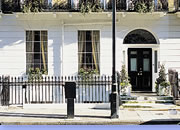






Psychotherapy During the Coronavirus outbreak – London UK

During the period of the coronavirus in the UK, there were a number of people who felt extremely isolated. The elderly, and those who had underlying health conditions, were the worst off because they had to isolate – indeed, they only came out very recently. The implications of being isolated are numerous. People need physical contact and relationships with friends and family and this was not possible during this period; in fact, even now many family members on unable to meet each other.
We are living in a stressful time, and now, more than ever, people need psychological support from a qualified psychotherapist or psychologist. At present, some people still prefer to have sessions on their telephones or on the computer. Some prefer to have telephone sessions while others use Zoom or Skype in order to interact with the therapist. There are others who go to the therapist in person. It is then your choice whether you want to have a session with your mask or without. David Kraft always sits two metres away and leaves a window open in order to reduce risk of transmission. However this is completely your choice.
What the Coronavirus situation has done is to open up opportunities for people to have therapy abroad. David Kraft has a clinic in Harley Street and in Enfield and, apart from exceptions, where people travel long distances for therapy, mainly he treats people who live in and around the West End or people from North London. However, he is now found that people are ringing him from all over the British Isles, including Ireland, Scotland and Wales. And, now, people are starting to ring him from all over Europe. If you would like a session please contact him on (07946) 579645 or email him at dmjkraftesq@yahoo.co.uk.
David Kraft PhD
President Elect, Section of Hypnosis & Psychosomatic Medicine, Royal Society of Medicine
Registered UKCP Psychotherapist
Honorary Secretary, BSCAH Mets & South
Honorary Treasurer, BSCAH National
10 Harley Street London W1G 9PF UK Flat 70, Cosmopolitan Court 67 Main Avenue Enfield Middlesex EN1 1GD
0207 467 8564 (General Enquiries) 07946 579645 (Work Mobile)
Telephone counselling in Enfield during Lockdown

With the present lockdown and restrictions due to
the Coronavirus, now is probably the best time to talk about the importance of
telephone counselling. I have been offering telephone counselling or telephone psychotherapy
for many years now. In the beginning, I utilised this approach for agoraphobics
who were simply too scared to leave the house; I also offered it to another
category of people who were frightened of transport or travelling by car.
Without telephone counselling they would have not been able to recover. The
next stage was gradually to desensitise them so that they were able to come for
regular appointments with me either in Harley Street or at my home practice in
Enfield. A number of clients were able to do this and their therapy moved on
fairly quickly, while others required more intense treatment. There are also those
who are so busy, either at work or at home or a combination, where telephone
counselling is really the best option. Presently, due to the lockdown, all of
my clients either have telephone counselling sessions with me or use some form
of video conferencing. All my clients in town or in Enfield are having session
this way, and this will continue until the lockdown is lifted.
Telephone counselling is just like having a face-to-face session but it is on
the telephone. There were a number of organisations which offer telephone
counselling on the internet; however, at Enfield Psychotherapy, we are very
flexible about setting up telephone counselling sessions. Some like to book 5
to 10 sessions in advance, and they obviously get a discount, what others like
to organise sessions on a weekly basis. There are also those who like to be
more even more flexible than this and they book sessions when appropriate.
Sessions can be booked Monday to Friday from 8 am to 8 pm. I also offer
sessions at the weekend—usually, on Saturdays.
May is World Mental Awareness Month. Celebrities and Royalty have spoken up
about the importance of helping people who are struggling with their mental
health. Indeed, nowadays people are much more accepting about mental health and
really the way to look at it is that everyone has got problems from time to
time. Today, life is very hectic, and creating a balance is very difficult.
Sometimes, it is helpful to speak to a professional mental health specialist
and this can be done conveniently over the telephone. If you are professional,
it is a great way to make time for yourself which is both convenient to you as
well as the therapist. In the therapy, you can talk about whatever you need to
talk about—the past or something that is happening in the present. It is important
in a counselling session to make sure you find a place where you are private,
where you can relax. However, some busy clients even take sessions during a walk,
and this is possible even in Enfield! What is important, is that it is right for
you and that you are comfortable in your surroundings while you talk to your
counsellor. Counselling psychotherapy can help you move on in life and become
more confident both at work and at home. But those who have a specific
psychological problems can deal with this with your psychotherapist over the telephone.
David Kraft is based in Enfield; however, he treats clients from all over the UK, and some people telephone in from abroad.
David Kraft
Appointments: 07946 569645
Enfield Psychotherapy in association with London Hypnotherapy UK
Coronavirus and the need for telephone counselling (part two)
In a previous blog, I pointed out that, during the lockdown phase of the Coronavirus, many people will be in a desperate need to make contact. Some people will be able to cope by sending text messages, emails, or by corresponding with friends and family members using video conferencing programmes. Most people will be missing being able to have a normal conversation with somebody in person—particularly those living on their own—and this, although difficult, is a completely normal reaction. However, there will be a number of people who will require telephone counselling and this is certainly something that London Hypnotherapy UK can offer.
Many existing clients, but also some new ones, have asked about hypnosis, and whether this could be done on Skype or Zoom. As a member of the Ac and Ac Committee of BSCAH, I have thought very carefully about the implications of employing this technique by remote—on the phone, or on some form of video conferencing. After some deliberation, I’ve decided that, actually, it would not be ethical to do hypnosis by remote. The reasons for this are as follows. First, hypnosis is a dual procedure which really should be done in person: one of the most important aspects of hypnosis is the personal touch, and rapport is best established with a person, being present in the situation. Secondly, there is the problem of an abreaction. If someone gets upset, for instance, it might be difficult dealing with this by remote.
However, I do have some solutions to this problem. One approach is to provide clients with an outline of how to do self hypnosis and to get them to practise it at home. Once they have learnt this approach, they can then act out the therapeutic technique—say, a metaphor of some kind—and work through some of the suggestions in a homework hypnosis task. Clients can then go away and practise the self hypnosis and provide the therapist with some feedback at the following consultation. Another technique is to act out hypnosis, in the consulting room, without any sort of induction: they can then practise this skill during the week. This is beneficial for clients because the therapist can provide feedback and give examples of helpful suggestions during the session.
If you’d like to book a telephone counselling or psychotherapy session with David Kraft please phone (0207) 467 8564 or email him at dmjkraftesq@yahoo.co.uk.
For an immediate appointment, please click HERE.
Coronavirus and the need for telephone counselling

We are living in a very difficult time at present. All of us are locked up in some way. The over 70s and the vulnerable are completely locked up and have to rely on others to shop for them: they are housebound and there is little hope of returning to normal life in the foreseeable future. Everybody else can only shop for essentials and get out to do some exercise for a very short period of time. We are all essentially social creatures. Even those who enjoy their own company and people who are somewhat introspective need validation and support from others. We also have an intrinsic need for touch and verbal communication.
Most of us are making every effort to continue relationships in some shape or form using the Internet— specifically by using social media and video conferencing. However, it is not enough. We live in a very stressful age with lots of noises and pressures at work and there has never been a greater need for counselling or psychotherapy. Of course, the waiting list for counselling and psychotherapy was long before the coronavirus hit the world. And now, people can’t get to see their psychotherapist because they are meant to stay at home. However, there are some counsellors and psychotherapists who are offering telephone or video psychotherapy sessions. If you would like an appointment, please ring 0207 467 8564 or email David at dmjkraftesq@yahoo.co.uk.
#EnfieldPsychotherapy #enfieldcounselling #enfieldpsychologist #enfieldpsychotherapist #MINDinEnfield #mentalhealthenfield #anxietyenfield #psychologicalhelpinenfield #psychologicalsupportfornursesnorthlondon
ENFIELD PSYCHOTHERAPY
Enfield Counselling Local Link: http://www.londonhypnotherapyuk.com/glossary-enfield-counselling-and-hypnotherapy-local/
David Kraft PhD
Registered UKCP Psychotherapist
10 Harley Street
London W1G 9PF UK
Flat 70, Cosmopolitan Court
67 Main Avenue
Enfield
Middlesex
EN1 1GD
0207 467 8564 (General Enquiries)
07946 579645 (Work Mobile)
Telephone Counselling: a Solution to getting Psychotherapy or Counselling during the Coronavirus Outbreak.

#Coronavirus has affected the whole population of the world in some shape or form, and getting psychotherapy is no exception. Over the last two weeks, I have had a huge number of people phone me, desperate for therapy but worried about going out. And soon, presumably, we will be forced to stay in our home or at least strongly advised to stay in solitude. This is going to be a difficult time for everybody of the next few weeks. Most people crave social interaction and this virus has put a stop to almost all social events.
0207 467 8564 (General Enquiries)
07946 579645 (Work Mobile)
Thankfully, I do offer Zoom and other #videopsychotherapy. I have also offered #telephonecounselling for a number of years, and this is most effective when it is combined with homework tasks, behaviour techniques and reframing. It is not advisable, however, to do hypnotherapy on a conference video call. However, the way round this is to act out the hypnosis technique over the phone and then practise it in your own time.
For more information of telephone counselling, click Here.
#EnfieldPsychotherapy #enfieldcounselling #enfieldpsychologist #enfieldpsychotherapist #MINDinEnfield #mentalhealthenfield #anxietyenfield #psychologicalsupportfornursesnorthlondon #telephonecounsellingduringcoronavirus #TelephoneCounsellingLondon
Clinics: Harley Street; Enfield
Toning Down the Coronavirus: A Fatalist Psychotherapist’s View

What is a School Street and how does this help to Reduce Stress and Anxiety for Teachers and Parents?
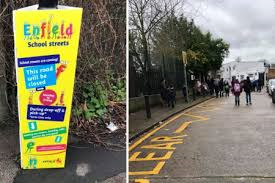
Two weeks’ ago, two ‘school streets’ opened. So what is a ‘school street’? A school street is when the roads surrounding the school close. This means that the whole of the area surrounding the school is free from traffic; as a result, when parents come to pick up their children from school, there is reduced pollution and there isn’t nearly the same amount of stress and anxiety. In most areas in north London, parents drive as close as they can to the school at pick up time: this causes pollution and congestion. In fact, many teachers point out that it can become dangerous on the streets with so many cars on the road. However, this is not the case in a ‘school street’. From Monday to Friday, during term time, only pedestrians, cyclists, permit holders and residents are allowed in the roads immediately adjacent to the school. So far, there are two schools which have signed up to this new scheme in the Borough of Enfield – namely, Oakthorpe Primary School, Palmers Green, and St Monica’s Catholic School near Southgate.
These schemes help to forge a more harmonious atmosphere in the local area, and they are extremely important to both children and parents. They also help to reduce stress for local teachers who are duty outside the school at the end of the day. The idea is that pupils also take up other forms of active travelling – cycling, walking, jogging and so forth. This scheme has all sorts of benefits for well being and the environment. Indeed, Climate Action Enfield is making further plans to reduce carbon monoxide in Enfield. As a psychotherapist, I often meet parents and teachers who are plagued by stress and anxiety particularly when it comes to home time. Many parents have to leave half an hour early in order to pick up their children. And teachers who are on duty—and this includes form tutors in the primary school setting, who cannot leave until they know that all their pupils are safe—really suffer at the end of the school day. This causes stress and anxiety at a time when teachers should be recovering from a hard day’s work. This new scheme is an excellent attempt to remedy this situation, and it is hoped that similar ‘school streets’ will appear in the rest of the Borough of Enfield.
Appointments: 0207 467 8564 (General Enquiries) 07946 579645 (Work Mobile)
Enfield-based psychotherapist, David Kraft PhD, offers reduced rates for teachers. For more information on counselling/psychotherapy for teachers, click here.
#EnfieldPsychotherapy #enfieldcounselling #enfieldpsychologist #enfieldpsychotherapist #MINDinEnfield #mentalhealthenfield #anxietyenfield #psychologicalhelpinenfield #psychologicalsupportfornursesnorthlondon
Therapist for the Stars

Last month, TV presenter, Caroline Flack, committed suicide just weeks before she was due to appear in court. She had been accused of assaulting her boyfriend and this, together with mass media coverage, had had a terrible effect on her mental health. Caroline Flack, who was brought up in Enfield, north London, won the 12th series of Strictly Come Dancing in 2014. A member of her family asked the press to be respectful and provide them with some time away from press coverage to grieve her death. However, as per usual, the press continued to write article upon article making assumptions about the situation prior to the suicide. Caroline is the third contestant in the dating show to have committed suicide; surely, questions have to be asked about the effect of mass, targeted media coverage of these celebrities. Mike Thalassitis and Sophie Graydon also complained that the media made up terrible lies about their lives and, the problem is that readers tend to believe what is written. This can make celebrities feel isolated, unprotected, let down and vulnerable. This leads to feelings of hopelessness, depression and anxiety amongst many other psychological conditions. Some people can cope with media attention but, for others, particularly when what is being said is not kind, find it more difficult. This can lead to drug abuse, over-eating or under-eating, alcohol addiction, and other maladaptive behaviours. Joshua Anthony has gained over half a million signatures in the attempt to make changes to the way that the media reports public figures like Caroline Flack. Let’s see what happens…
For more information on psychotherapy, call David Kraft on 0207 467 8564.
David Kraft is a well-respected psychotherapist. Based in Harley Street, he also has a private practice in Enfield. Some celebrities know him as ‘the therapist for the stars’; however, this is not widely known, because all his clients tend to keep their therapy secret; and, indeed, confidentiality is of paramount importance.
#EnfieldPsychotherapy #enfieldcounselling #enfieldpsychologist #enfieldpsychotherapist #MINDinEnfield #mentalhealthenfield #anxietyenfield #psychologicalhelpinenfield #psychologicalsupportforcelebrities #therapistforthestars
Building for the future? What about nature? Psychotherapist, David Kraft, talks about the importance of nature to mental well being

In a December issue of the Enfield Dispatch (No. 15), James Cracknell spoke of a public fear that one of the best known golf clubs in the local area would be destroyed and turned into another commercial enterprise. This time it is Whitewebbs. In the spring of last year, the council reported that they intended to lease the golf course to a private source in order to cover costs. Whitewebbs is a 42-hectare golf course just under 2 miles from the centre of Enfield Town and just off the M25. We have learned recently, from Enfield Dispatch, that a further 55 hectares were included in the bids. Some local golfers are distraught about this news because they have recently learnt that some enterprises intend to close the golf club, which has been open for some 87 years. Some bidders have suggested turning it into a leisure complex. Other ideas include an outdoor gym and a biking facility. This problem is not just one for the golfers. The additional adjacent land might also been destroyed in the process. This land is part of a suite of Green Belt which runs from the Forty Hill Estate to Hilly Fields. Residents from Enfield, Cheshunt, Forty Hill and other surrounding areas enjoy the land for recreation. Indeed, this land has been enjoyed by local residents for over a hundred years.
Appointments: 0207 467 8564/ 07946 579645
Nature and enjoying the local surroundings are topics which often come up in my work as a psychotherapist. In fact, it has been well documented that spending time in the countryside, growing produce and enjoying green spaces can improve mental wellbeing, increase confidence, reduce stress, increase relaxation and improve overall mental health. Those who suffer from depression, for instance, often benefit from going on long walks: indeed, I often advise clients to walk their dogs or go out on their own to experience some peace and quiet, away from the hustle and bustle of town life. This is an essential part of psychological rehabilitation. Whether you are doing CBT, psychotherapy or are seeing a psychologist, it is important to add this element to the work that you do in the consulting room. And, particularly in busy towns, and Enfield is by no means an exception, people need to experience the calmness and serenity of open spaces. This is why places like Whitewebbs and the adjacent lands are so important to the local community. Let us hope that some of this land is left for people to enjoy in the future.
Reduced rates for psychotherapy at the Counselling Directory
#EnfieldPsychotherapy #enfieldcounselling #enfieldpsychologist #enfieldpsychotherapist #MINDinEnfield #mentalhealthenfield #anxietyenfield #psychologicalhelpinenfield #psychologicalsupportfornursesnorthlondon
Enfield Psychotherapy Link:
https://www.londonhypnotherapyuk.com/glossary-enfield-psychotherapy/
Enfield Psychotherapy
Flat 70, Cosmopolitan Court
67 Main Avenue
Enfield
Middlesex
EN1 1GD
The importance of fulfilling one’s potential in psychotherapy
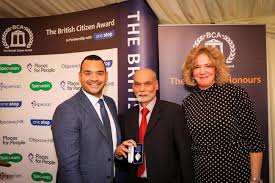
In the recent issue of the Enfield Haringey Independent, James Cowen wrote an interesting article on the inspirational running coach, Vinod Patel, who had just been awarded the British Citizen Award for his services in the local community. On 23rd of January, Mr Patel went to the Palace of Westminster where he was awarded the prestigious award. For the last 40 years, Mr Patel has been coaching runners in Enfield for free. And, not only has he coached them but he has spent a great deal of time devises tailor-made fitness schedules for competitors in and around Enfield Town. He was presented his metal at the House of Lords by the famous TV presenter Michael Underwood.
0207 467 8564 (General Enquiries)
Mr Patel is a well-known character in the Enfield community and he works alongside people from all ages and backgrounds. What is important about this story is that Mr Patel spoke of the importance of helping everyone realize their potential. This is similar to the work that I do as a psychotherapist. As a therapist, I often talk to my clients about realizing their potential—working through problems and then envisaging their desired future. Of course, it is important, during therapy, to isolate troubled issues and anxieties; however, often, the solution to dealing with psychological problems involves devising a tailor-made approach to treatment. This may involve devising a plan of activities to suit the person’s need. Regularly, individuals in therapy talk about things that they enjoyed doing in the past with a sense of longing; and, indeed, part of the psychotherapy is working towards getting individuals back to enjoying life to the full. These activities could be anything—for example doing exercise, playing football, going to the theatre, playing a musical instrument or planning regular visits to foreign cities. But whatever the passion, it is important to plan your schedule so that you can enjoy those hobbies. Fulfilling your potential is an important aspect of psychotherapy.
#EnfieldPsychotherapy #enfieldcounselling #enfieldpsychologist #enfieldpsychotherapist #MINDinEnfield #mentalhealthenfield #anxietyenfield #psychologicalhelpinenfield #psychologicalsupportfornursesnorthlondon
Enfield Psychotherapy Links:
https://www.londonhypnotherapyuk.com/glossary-enfield-psychotherapy/
Enfield Counselling Local Link:
https://www.londonhypnotherapyuk.com/glossary-enfield-counselling-and-hypnotherapy-local/
David Kraft PhD
Useful Addresses:
10 Harley Street
London
W1G 9PF
UK
Enfield Psychotherapy and Hypnotherapy
Flat 70, Cosmopolitan Court
67 Main Avenue
Enfield
Middlesex
EN1 1GD